bing pixel

ֱ̲

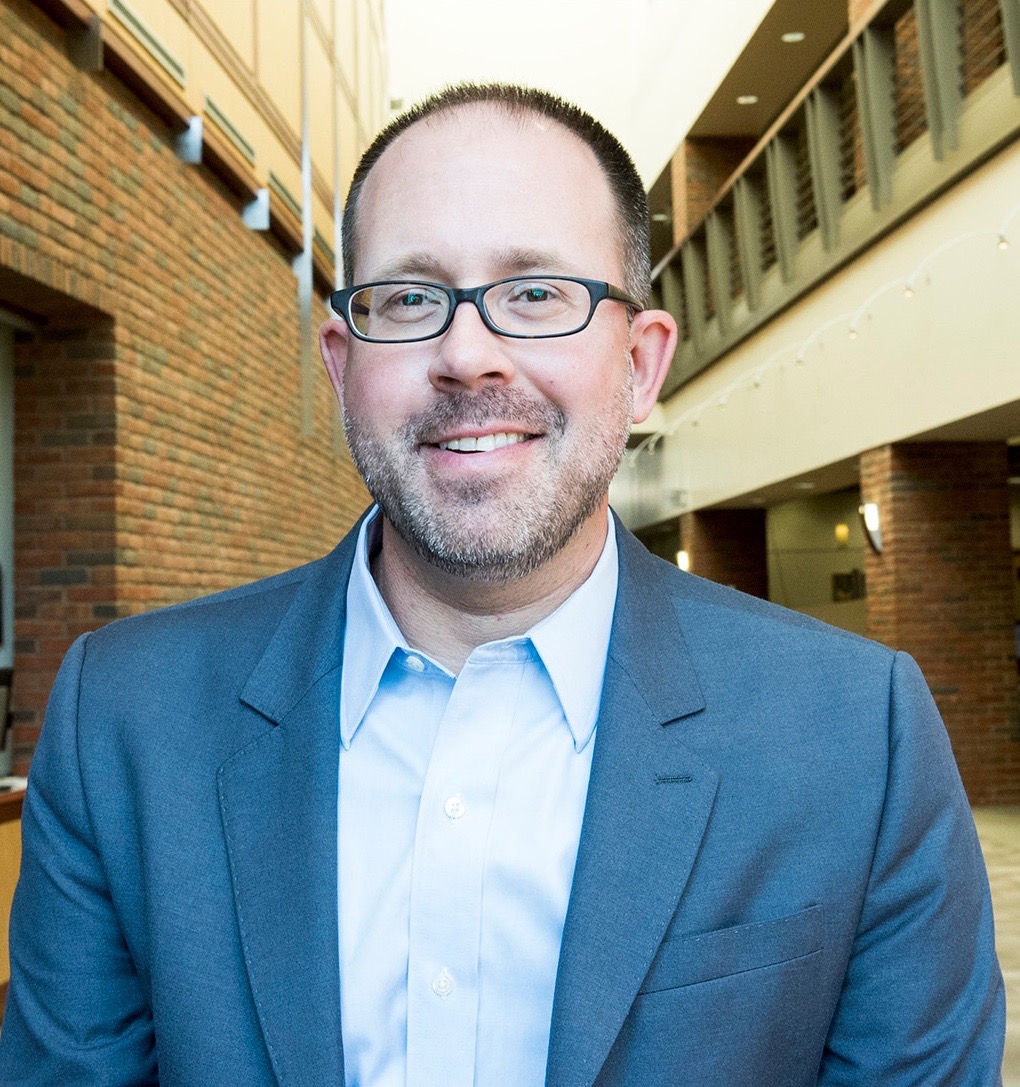
KSTP’s Political Insider program features Andy Aoki

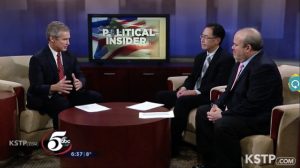
Andy Aoki on set at KSTPThis week, Andy Aoki, department chair of political science and Sabo fellow at Augsburg College, was a featured analyston Political Insider, a weekly news segment broadcast on KSTP.

Aoki joined Larry Jacobs, a University of Minnesota faculty member, and provided input on a variety of local and national political stories including Minnesota’s health care affordability issue and confirmation hearings for President Elect Donald Trump’s cabinet members.

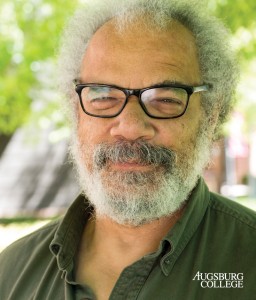
Bill Green lends historical perspective to Black Lives Matter media coverage

Summer 2016 Pinterest6

What does it mean to matter?  What does it look like to matter?

With the Black Lives Matter movement, questions of racial equity have ignited important—and difficult—conversations in communities and courtrooms, on political campaign trails, and atcollege campuses.

Augsburg College Professor studies and writes about Minnesota history and law. He teaches U.S. Civil Rights subject matter, and he recently has been called upon to share his expertise on these topicsto assist media outlets covering Black Lives Matter news in the Twin Cities.

Greenwas quoted in a Minnesota Public Radio article that examined the roles non-black activists play in furthering theBlack Lives Matter movement’s agenda.

In the article, “,” Green usedthe history of the Civil Rights movement to analyze current demonstrations and protests. He also discussed the ways “protest fatigue” could impact the movement’s progression.

On August 5, Green also appeared onTwin Cities Public Television’s “Almanac” program where he provided a comparison between contemporary protests ordemonstrations andthose occurring decades — perhapseven centuries — earlier. Green explained that the tactic of making a public display can be useful when a group is seeking to meet a particular goal.

“The trick with the demonstrations, of course, is somehow helping society turn the corner so that … a community doesn’t feel the need to resort to desperate measures,” he said.

Theinterview with cohosts Cathy Wurzer and Eric Eskola is available on the and begins at the 31:55 minute mark.

Green’s comprehensive knowledge of Minnesota history has been cultivated over decades, and his latestbook, “Degrees of Freedom: The Origins of Civil Rights in Minnesota, 1865-1912”chronicles conditions for African-Americans in Minnesota in the half-century following the Civil War. The publication picks up where hisprevious book, “A Peculiar Imbalance: The Fall and Rise of Racial Equality in Minnesota, 1837-1869,”left off. Green spoke with MinnPost about the publication, describing his interest in statehistory.

“The history [of Minnesota] is amazing, particularly when you look at who was here before statehood and how they interacted with each other,” hesaid. “I found that we were lacking a good accounting of the black people who were part of that history. Most of them didn’t leave a written record, which looks like they had nothing to say, but of course they did. They were part of this experience.”

The Minnesota Book Awards honored Green and “Degrees of Freedom” with the 2016 Hognander Minnesota History Award.

Michael Lansing writes for MinnPost

Michael Lansing, associate professor and History Department chair, recently penned an article comparingthe United States’contemporary political landscapewith periods in the late 1960s and late 1970s.
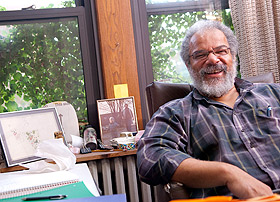
Lansing is a historian of the modern United States, and his research focuses on political history, environmental history, and other topics. In his Community Voices commentary, Lansing argued that the state of American democracy and milestones occurring in 1979 aresimilar to current events.

Read, “” on the MinnPost site.


Andy Aoki discusses influence of vice presidential picks

Andy Aoki

WCCO TV recently sought counsel from Andy Aoki, professor and department chair of political science at Augsburg College, to answer a question about how much a presidential candidate’s vice president selectioninfluences voters.

“How Much Does The Vice President PickMatter?” was the focus of therecent Good Question segment.

Aoki provided a straightforward answer.

“It doesn’t usually matter a lot,” he said. “The vice presidents tend to get a lot less attention, so it’s not that easy for people to make their pick based on them because you don’t know much about them.

on theWCCO site.

Bill Green lends historical perspective to MPR News article

bill_green
Bill Green

Augsburg College Professor studies and writes about Minnesota history and law. He recently was quoted in a Minnesota Public Radio article that examined the roles non-black activists play in furthering theBlack Lives Matter movement’s agenda.

In the article, Green called on the history of the U.S. Civil Rights movement to analyze current demonstrations and protests. He also discussed the ways “protest fatigue” could impact the movement’s progression.

Read, “” on the MPR News site.

Andy Aoki discusses international politics with WCCO-TV

AokiAndy Aoki, professor and department chair of political science at Augsburg College, recently spoke with WCCO-TV about the implications of Britain’s decision to leave the European Union, a move now referred to as “Brexit.”



Aoki noted that visitors to the United Kingdom may benefit from the devaluation of the pound, but Britain’s unexpectedpolitical move also had far-reaching negative effects on financial markets around the globe.

“If you’re going this summer, you’ve kind of hit the lottery because the pound doesn’t look to recover much in the near future,” Aoki told reporter Rachel Slavik.

Economic and immigration issues were in the spotlight as the British debated whether or not to pull out of the European Union, and Aoki also provided Slavik with background on how these issues are influencing the 2016 presidential campaign in the United States.

Watch, “” on the WCCO website.

Scott Washburn discusses public figures’ privacy with MinnPost

Scott Washburn, assistant director of Augsburg College’s StepUP® program, was one the experts interviewed by MinnPost for an article examining public figures’ right to privacy as well as the rights of the public figures’ significant others. The article examined anoverarching theme that probed, “How much of a candidate’s own personal life should be made available for public debate?”

In responding to a question on whether it is appropriate for the mental health or addiction history of a political spouse or other family member to be made public, Washburn arguedthat sort of political playmakinggoes over the line.

“I don’t think it’s appropriate at all,” Washburn said. “The candidate is running, not the family member. The electorate is voting for the candidate, not the family member. The family of a presidential candidate is going to be dragged into the public eye, but I think it’s important to respect some boundaries here. It’s an issue of respect and privacy. The candidate would be fair game from my perspective, but I don’t think family members should be. It just reflects how low things have gone in this political race.

All that being said, if the family member chooses to publically disclose his or her personal history, then that is a different conversation.”

Read additional responses from Washburn in “” on the MinnPost site.

Michael Lansing interview appears on Minnesota Public Radio

Michael Lansing, associate professor of history at Augsburg College, was interviewed by MinnesotaPublic Radio for a segment that comparedpolitical movements fromthe early 1900s with the contemporary political landscape. Lansing is the author of “Insurgent Democracy: The Nonpartisan League in North American Politics,” which presents the history of The Nonpartisan Leagueand describes its continuedinfluence in the upper Midwest.

Lansing describes the League as a grassroots organization started by farmers who were discontent withlarge grain milling and transportation corporations in the region. Hetold MPR News host Tom Weber that The Nonpartisan League is the reason for the large number of co-operatives in North Dakota today, and the party was comprisedof farmers who sought candidates that supported their platforms, regardless of party.

Listen to:(14 minutes) on the MPRsite.

Michael Lansing interviewed by Pioneer Public Television, publishes MinnPost article

Pioneer Public Television (PPT) recently included an interview with Michael Lansing, associate professor of history at Augsburg College and author of Insurgent Democracy: The Nonpartisan League in North American Politics, in an episode of Compass, a program that focuses on public policy and other issue of importance to PPT’s community.

Lansing’s book details the history of the Nonpartisan League, a political movement active in North Dakota, neighboring states, and some Canadian provinces in the early 1900s. The interview is on the PPT website.

Additionally, MinnPost - logoLansing wrote an article for MinnPost that examines the trend of comparing the current sociopolitical climate with the “Gilded Age” of the late 19th century. He argues that the results of recent presidential primaries in New Hampshire, which overwhelmingly rejected candidates viewed as having ties to the political establishment, reflect an important change in voter attitudes.

“American voters now believe they are living in a second Gilded Age,” he writes. “This shift has the potential to transform our nation’s politics.” He adds that regardless of the final outcomes of the nomination processes, this change is a noteworthy signifier of Americans’ rejection of the status quo.

Watch on the Pioneer Public Television site.

Read on the MinnPost site.

Star Tribune celebrates Koryne Horbal, mentions lecture series

Minneapolis Star Tribune - logoThe Minneapolis Star Tribune recently published an article covering the life of Koryne Horbal, political activist and former United Nations ambassador for women. Horbal co-founded the Minnesota DFL’s feminist caucus and was an early champion of still-debated issues such as the Equal Rights Amendment, sexual slavery, reproductive choice, and workplace equity.

The article notes Augsburg’s Koryne Horbal Lecture Series in which the College welcomes prominent feminist speakers including Gloria Steinem, Jane Fonda, Winona LaDuke, and The Guerilla Girls. Horbal has been a consultant for the Women’s Resource Center at Augsburg and was awarded an honorary doctorate from the College in 2008.

This year, the lecture will take place on March 9 and feature Nekima Levy-Pounds, president of the Minneapolis chapter of the NAACP. More information on the event is available on the Convocation Serieswebsite.

Read “” on the Star Tribune site.