
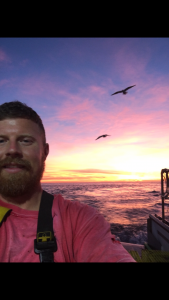
Jason Kusiak spends late winter and early spring long-lining for cod and haddock, and most of the year catching lobster. Fishing in some of America鈥檚 oldest seaports near Gloucester, Mass., gives Kusiak an appreciation for the area鈥檚 rich history, and a healthy respect for those who made a living fishing the Atlantic in earlier times. He relishes the hard work, excitement, and competition of constantly driving at something, and 鈥渨ith fishing, you can see the direct result of your work ethic,鈥� he says.
Also, the waters seem to provide the environment for a thoughtful transition. Kusiak is the first to admit that his career plans are still evolving, and that, at 33, he鈥檚 not sure what lies ahead. He states with conviction that he always wants to be growing, and 鈥渢o be present鈥� in his own life in order to experience much and maintain great relationships. Oddly enough, a few years ago, he wondered if he would live to be 27.
Very active as a youngster, Kusiak had earned a black belt by age 9 and had placed first at nationals. In high school he played football, basketball, and lacrosse. He pushed himself to excel. But at the end of his senior year and on the eve of a big recruiting summer for lacrosse, a high school party became the proverbial 鈥渇ly in the ointment.鈥� Racing through the woods in the dark with a friend, Kusiak ran into a fire-road steel gate, resulting in a double-compound fracture of his leg and the shattering of his elbow.
 Kusiak became addicted to painkillers, and it was a struggle not only to discontinue use of opioids but to obtain help from insurance companies to do so.
He eventually sought help and treatment at the Hazelden Betty Ford Foundation. Shortly thereafter, he learned about the , Augsburg鈥檚 residential collegiate recovery community, and he began his studies in 2006. 鈥淭hat fellowship of walking through this together鈥� (in the same residence hall as other students dealing with substance abuse) made academic success much more likely, and Kusiak felt as if the 鈥渨hole school bought into it and that鈥檚 why Augsburg is unique.鈥� He is especially grateful to StepUP鈥檚 director Patrice Salmeri and former director Dave Hadden and to professors John and Peggy Cerrito for the 鈥済reat impact鈥� of their entrepreneurial class, particularly the focus on learning through experience and connections. Continue reading “Healing Waters”