bing pixel

绿茶直播

Auggie Starts National Hockey Award

Charles "Chuck" Bard '50
Charles “Chuck” Bard ’50

Growing up, Chuck Bard was an all-around sports enthusiast. He played football, basketball, baseball, and even won a few championship titles in beanbag toss and horseshoes. At Augsburg, Chuck was a letterman in football and baseball and received an athletic sweater with recommendations from the athletic director and football coach in 1948. He played second base on Augsburg鈥檚 1947 and 1948 MIAC Conference Baseball Championship teams. However, the sport that Chuck loved most 鈥 and the sport that gained him the most notoriety 鈥 was a sport he never played: hockey.

Hockey was a relatively new sport when Chuck was in school. By the time he started college, Augsburg had a hockey team, however Chuck was already playing football and baseball and student-athletes were allowed to only join two sports at the time. This did not hinder his love of hockey, though. Chuck attended as many Auggie hockey games as he could and enjoyed watching the players out on the ice.

Chuck had a successful athletic college career in football and baseball at Augsburg, as well as a successful academic career. After graduating in 1950 with a degree in Physical Education and a minor in Journalism, Chuck went into banking.

鈥淚 was active at the YMCA, where I met two bankers one day. They were asking for army guys such as myself to come in for training. I figured as long as I鈥檓 here, I might as well interview. I interviewed and that evening I got a call from Northwestern Bank offering me a job. I took it! I was a banker for twenty years,鈥 says Chuck.

Chuck continued his passion for sports by co-founding the Decathlon Athletic Club in the late 60鈥檚. Located in Bloomington, Minnesota, it was the first private athletic club in Minnesota outside of downtown Minneapolis or St. Paul.

鈥淲e had the former executive of the St. Paul Hotel with us for six months to help with strategy, but he said the club would never run in the suburbs because all the clubs were downtown.鈥

Chuck made sure the athletic club opened and he spent the next twenty years turning it into a success.

In 1978, Chuck was the CEO of the Decathlon Athletic Club. He was still an avid hockey fan and a proud owner of Minnesota North Stars hockey season tickets. But he noticed hockey didn鈥檛 have a collegiate award to honor the best collegiate hockey players in the nation like other sports.

鈥淔ootball had the Heisman Award. Basketball had the Wooden Award. What about hockey?鈥

Hobey Baker Award trophy

Chuck decided his athletic club would start a nationally recognized hockey award. After consulting with the Los Angeles athletic club that started the Wooden Award, Chuck established the , named after hockey legend Hobey Baker. Chuck was captivated with Baker鈥檚 athleticism. Baker was an All-American football and hockey player, and was the first American hockey player to be enshrined in the Canadian Hockey Hall of Fame.

In 1981, the first Hobey Baker Award was given to Neil Broten. Broten played Center for the University of Minnesota and the 鈥淢iracle on Ice鈥 U.S. Olympic hockey team, which took gold at Lake Placid in 1980.

Since that first award, The Hobey has been awarded to from around the country. The award is given to a player who best demonstrates 鈥渢eamwork, dedication, integrity, exceptional play, humility, and above all, character.鈥

In 2007, Chuck returned to his alma mater to honor Augsburg men鈥檚 hockey coach, Ed Saugestad, as a honoree.

In the early 2000鈥檚, Chuck took a deep look into his program to evaluate how things were going. One step he took to ensure the award鈥檚 longevity was to hire a new marketing and public relationship programmer, Wally Shaver. Wally was no stranger to hockey and was an ideal candidate according to Chuck. Wally has been the voice of the University of Minnesota鈥檚 Gopher hockey for years, following in the footsteps of his father, Al Shaver, who was an announcer for the Minnesota North Stars.

鈥淚 got a phone call from my friend, Herb Brooks, who was a member of the Decathlon Club. The Hobey Baker people wanted a change with their marketing. It was all in-house with Chuck in the beginning,鈥 says Wally. 鈥淗erby gave me a call and said I should talk to them. I said, 鈥楪eez I鈥檇 love to help any way I can!鈥欌

Incidentally, Wally also had a connection to Augsburg. His son, Jason Shaver, was a hockey goaltender for Augsburg in the early 90鈥檚.

鈥淭he Hobey Baker Award is a fun project to work on. It鈥檚 unique. What the Heisman is to football, the Hobey is to hockey,鈥 says Wally. 鈥淚t鈥檚 a prestigious award and everyone loves it. Especially the kids, they appreciate recognition for all their hard work during the season.鈥

While the award remains true to its original vision 鈥 to recognize the top NCAA men鈥檚 ice hockey player in the nation 鈥 it has evolved over the years. What started as one trophy for college hockey鈥檚 most outstanding player has grown into a first place winner, three Hobey Baker Hat Trick finalists, The Hobey Baker High School Character Award, Legends of College Hockey, and a TV show that airs on the NHL network the Friday before the Frozen Four begins.

Even in retirement, Chuck is still a major supporter of the Hobey Baker Award. And he continues to watch as much hockey as he can.

1947 MIAC Championship Team
Team members from the 1947 and 1948 MIAC Conference Baseball Championship Teams recognized at Hall of Fame banquet. Charles Bard 鈥50, Ken Walsh 鈥48, Art Marben 鈥47, Roger Leak 鈥50, Marvin Johnson 鈥49, Jennings Thompson 鈥51, Jeroy Carlson 鈥48. Back Row: Edor Nelson 鈥38 Coach, Ralph Pearson 鈥49, Duane Lindgren 鈥48, Arnold Henjum 鈥49, Robert Howells 鈥50, Bobb Miller 鈥48.

Nursing in the Community

David Clark ’18 – Doctor of Nurse Practice Program

Katie and David Clark

David Clark had been in nursing for a few years, working as an intensive care nurse in hospitals. In an ER, nurses and doctors try to medically diagnose people to fix a problem. But David wanted to know more about why people were coming to the ER 鈥 especially the 鈥渇requent flyers鈥 鈥 and if there was a way to better help them. He鈥檇 never seen nursing in the community, never seen how nursing practice was serving marginalized communities.

So when his friend and colleague from ICU at Fairview, Katie Clark, invited him to volunteer at Augsburg鈥檚 Health Commons in Minneapolis, he jumped at the chance. And it was here that David learned about Augsburg鈥檚 nursing program.

Augsburg鈥檚 Health Commons is a nursing-led drop-in center, led and organized by nursing faculty members, nursing volunteers, students, and community members.

Ruth Enestvedt was the director then, and the wonderful nurses volunteering had an amazing connection with the community, with people who had disappeared from society and were homeless,鈥 says David. 鈥淭hese folks came to the commons to be part of a community. This was inspiring to me, to cast a new way nursing could serve a community.鈥

When talking about the Health Commons, Ruth Enestvedt said, 鈥淲e assume that people are experts in their own lives. We provide useful, relevant service that respects what the person brings to the situation.鈥 David took this statement to heart and decided to finish his graduate degree at Augsburg because of the program鈥檚 emphasis on marginalized people.

鈥淚 was working in an intensive care and ER in downtown St. Paul at the larger of the trauma centers for the inner city. It was like being at two ends of the pipe: I saw how community issues from the Health Commons translated into why people ended up in my ER frequently. I saw the connections to the complex story.鈥

David earned his bachelor鈥檚 degree from the University of Minnesota. While he says the U of M is a great school, when looking for a doctoral and nurse practitioner program, he wanted something focused on community outreach. He found this at Augsburg.

鈥淎ugsburg is unique in what it鈥檚 trying to do with community.鈥

David is now an emergency room nurse practitioner. He wanted to stay on the ER track, but also wanted to carry on his doctoral work. He works in the St. Croix Falls area, at a smaller medical center with an ER.

鈥淚 ended up here in part because of where I live, but also it serves marginalized rural communities. It鈥檚 incredibly hard to get health care access in rural communities, and Polk County is near the top of the lists for struggling for health care access.鈥

This medical center serves a lot of the River Valley in western Wisconsin. They deal with a fair amount of people in poverty 鈥 who live in trailers and on farmsteads 鈥 so David and his colleagues work closely with the state to increase access.

鈥淚鈥檓 still training, I鈥檓 kind of a resident right now, still getting on my feet, but I鈥檓 able to do graduate work and work with people who experience poverty. It鈥檚 a smaller volume than I am used to, but I鈥檓 finding a lot of hallmarks between the city and the country, just different kinds of challenges.鈥

While David appreciates the education he received at Augsburg, he is also thankful for Augsburg because it was his volunteering at the Health Commons where he discovered another great love: his wife, Katie Clark.

鈥淚t was great to find Katie!鈥

Katie is an Assistant Professor at Augsburg and took over as Executive Director of the Health Commons when Ruth retired. After working at the ICU at Fairview together, and then volunteering at the Health Commons together, Katie and David started dating and after a short time got married. Together, David and Katie continue to work with marginalized communities in hopes that they can help others look at a new way to practice and see patients.

Augsburg’s Health Commons

Health Commons tree logoThrough the years, Augsburg nurses have met community members who have welcomed their service. In the relationships that have developed, nurses continue to experience the mutuality of health 鈥 when someone grows stronger, that strength helps everyone in the community.

Since its opening, the Health Commons has been supported by donations of both time and supplies from people of many backgrounds who want to help. The original partners continue to support the Commons, and nurses from the wider nursing community also assist in its operation.

The Nontraditional Route to Higher Ed – Anthony Howard ’18

Anthony Howard 2018Anthony Howard ’18 didn鈥檛 take the traditional route through higher education. He graduated from high school early and immediately went into the business world as a full time employee at Ponsse in Wisconsin, a forest machinery company headquartered in Vierema, Finland. While on a business trip in Finland, Anthony asked if there were any openings to work in Finland. He was looking for an opportunity to learn more, as well as get outside of his comfort zone.

One month later, he moved to Finland.

Anthony was there for two years, working predominately with international business relations.

鈥淚 was alone, young, and didn鈥檛 have much support in Finland. So I was forced to grow up, be a self-starter,鈥 says Anthony.

At the end of 2009, he was ready for a new challenge, so he moved back to the United States and after a winter off, he took a job in Michigan with Roland Machinery Company. It was a good job, but he realized that while he鈥檇 been successful so far, he needed a higher education.

鈥淚 knew I wouldn鈥檛 have the ability to keep moving and doing things as I had been up to this point.鈥

He moved to Minnesota and signed up for an information session at Normandale Community College to learn more about their AA Business program.

鈥淚 ended up enrolling for school that night. I wasn鈥檛 a big school person so I picked classes that I knew I鈥檇 like to keep me interested. And after two years, I got a bug to go after my Bachelor鈥檚 degree.鈥

That鈥檚 when he found Augsburg. Anthony discovered his credits from Normandale would transfer well to Augsburg. He also fell in love with the campus and Adult Undergraduate program availability. He needed weekend and evening classes, but still wanted the in-person teaching. Augsburg鈥檚 Adult Undergraduate program fit all his needs.

Anthony enjoyed his accounting classes, and took any class he could with Professor Marc McIntosh. However, his favorite classes were the electives, such as book making and theater.

鈥淭he liberal arts education at Augsburg helps craft character.鈥

Anthony鈥檚 ethics class used references that he uses today in his workplace. He took two years of Spanish; he doesn鈥檛 remember the Spanish now, but he does remember being outside his comfort zone trying to learn another language. And he believes theater helped him learn about preparation, a lesson that circled back a few years later while he was studying leadership as part of the master鈥檚 program at the University of Minnesota鈥檚 Carlson School of Business.

鈥淢y professor reiterated the importance of a theater exercise: take a note. In theater, students take a note from the director about evaluating their performance. In the business world, you can take a note from leadership that helps elevate your work performance.鈥

After graduating from Augsburg in 2018, Anthony and his wife had a small group of friends get together for the 4th of July. One of his friends is a career coach and asked what he was going to do next.

鈥淪he got my wheels turning, so I looked into specialty Masters programs. I didn鈥檛 want a general MBA, I wanted something very specific. I found a supply chain program which brought all my career pieces together. I deferred one year for our second baby. Then I completed my Masters in the summer of 2020.鈥

Now Anthony is 90 days into his job as COO at Escali, a Minnesota company which manufactures measuring equipment for home and professional settings.

鈥淛oining a new company in midst of COVID is interesting. There are limited people, limited interactions, and it makes for a weird transfer into a new role.鈥

When asked what advice he has for students, he says when searching for a job, do the resume steps and have an elevator pitch. He also recommends reading The 20-Minute Networking Meeting because it teaches you how to come across as professional in any situation.

He also believes in networking.

鈥淵ou鈥檒l meet some awesome people, and they may or may not directly help you with a future job. If you do a good job staying in touch, they might be a good resource to have down the road. Get outside your comfort zone, talk to people. I networked my butt off to gain experiences. I had a lot of coffee with a lot of people just to ask questions and really learn about their work. After those meetings, I really reviewed and appreciated what I learned; that鈥檚 the goal. Today, I鈥檓 comfortable applying COVID rules to a new company with new people because of all the work I鈥檝e done before that took me outside of my comfort zone. It鈥檚 not scary now.鈥

The Man in the Pines – one Auggie’s quest to find a story

Book cover showing the silhouette of a man and pine trees against a twilight sky, with the title "The Man in the Pines" and "A Novel by David Nash."Per Minnesota tradition, David Nash 鈥06 first met the giant, talking Paul Bunyan in Brainerd, Minnesota when he was really young, and it left a lasting impression. So a few years ago when picking an American folklore to read to his son, it was obvious to David he should read the story of Paul Bunyan. Unfortunately, his son wasn鈥檛 that interested in tales of Paul and Babe the Blue Ox.

David has always enjoyed writing music, so he wrote a song about Paul to sing to his son, imagining if Paul was a real person. He wondered what if Paul鈥檚 story was a bit sadder, and perhaps we were taking advantage of his story and turning it into something else to get the happy folklore that it is now.After writing the song, David played it at an open mic and people really enjoyed it. Later, he heard an interview of a musician he listens to who mentioned they wrote a book based off a song.

鈥淚t occurred to me: why does my song have to be the end of the story?鈥

After his kids went to bed one summer night in 2018, David sat down and started writing. Then it was every night when the kids went to bed. He鈥檇 sit down in a chair and write and write and write.

鈥淚t all came on suddenly, almost to the point that it felt kind of like a sickness. It was like I couldn鈥檛 get better until the story was all written down.鈥

By researching the history of logging in Minnesota and Wisconsin, as well as the great Hinckley fire, David aimed to write a historically accurate novel with American folklore, historical ecology, Native American spirituality, and love.

When a draft was complete, the next step was publication. David鈥檚 wife, alumna Sara (Holman) Nash 鈥06, suggested he reach out to Augsburg鈥檚 English Department. Sara is an English major graduate from Augsburg and connected David with Professor Emerita Kathryn Swanson.

鈥淜athy Swanson and the English Department helped me look for publishers and things to consider in terms of what makes the project聽marketable, and writing resources.鈥

Two publishers accepted David鈥檚 book: one was from Oregon and the other, Orange Hat Publishing, is located in Waukesha, Wisconsin.

鈥淚 went with the Waukesha publisher. Being more local, I felt a good connection with their owner, who went to the same high school as me.鈥

After rounds of formal editing and book designs, was ready to be released. A book launch party was planned for April 2020 at a local brewery in La Crosse, Wisconsin. The party and book tour was going to be accompanied by David鈥檚 The Man in the Pines .

However, the current pandemic prevented the party from happening and canceled the book tour.

鈥淲ith COVID, self-promotion is hard right now. As a musician, I thrive more off immediate interaction with people, in-person.鈥

David isn鈥檛 giving up, though. He still released the book in March and did an online reading with a few other authors. He also hosted an online concert with one other musician, during which David explained a few stories from book and played songs. When it’s safe to do so, he will tour with his book and accompanying songs, and have a proper launch party in La Crosse.

One surprising thing David learned about himself while writing The Man in the Pines is that he really likes writing.

鈥淚f someone would have told me I would enjoy writing a book, it would have been hard to comprehend. I like that you can start with an idea and you may not know your destination. I like writing myself out of problems. It can be frustrating, but also gratifying to discover the journey of your characters as you write.鈥

Man with a beard, wearing a plaid shirt, standing with arms crossed against a gray background.
Photo from alumna Lauren (Falk) McVean 鈥06. Photo credit Lauren B Photography ().

David had an early connection to Augsburg. His mom, Susan Nash, Ed.D., has been a nursing professor at Augsburg鈥檚 Rochester campus since 1998, and his older brother, Collin, played hockey at Augsburg. David was a biology major and also played hockey. He met his wife, Sara, their senior year in college, at a mutual friend’s birthday party.

Today, David is a Pediatric Ophthalmologist and Strabismologist at Gundersen Health System in La Crosse. He lives in Wisconsin with his wife and two children, where they spend most of their time outdoors, kayaking, jogging, fly and trout fishing, hiking, painting, and practicing photography.

鈥淚 have more interests and hobbies than I have time for!鈥

Making an Impact Through Problem Solving

Professional headshot of a person with blonde hair in a magenta blazer and silver necklace.Brynn Watson 鈥89 is Lockheed Martin鈥檚 Vice President in the Digital Transformation Program. As COVID-19 moved most of Lockheed Martin鈥檚 work online, Brynn鈥檚 work became more important than ever, helping her teams pivot to a digital platform. She has been pleasantly surprised that productivity and efficiency have continued and says her teams have adapted positively to online programs to stay connected. While this has been a big change for most of the company, it鈥檚 a change Brynn embraces, especially in her leadership role.
鈥淲e鈥檙e more empathetic about work-life balance. Parents are teaching their kids. We鈥檝e become more accepting about dogs barking in the background of a phone call. I like that change. It鈥檚 a good thing.鈥

Brynn has an award-winning record for her leadership abilities: Lockheed Martin Space NOVA Full Spectrum Leadership Award; Tribute to Women Honor by the YWCA of Silicon Valley; and Lockheed Martin Space Ed Taft Diversity Leadership Award.

In 2018, Brynn was recognized with Augsburg鈥檚 Distinguished Alumni Award for her commitment to helping young women in STEM.

Brynn鈥檚 dedication to helping others through community building started long before her work at Lockheed Martin. It started in middle school with the influence of another Auggie: Ertwin 鈥淓rt鈥 Jones-Hermerding.

Ert graduated from Augsburg in 1969 with a degree in Speech, then moved to Robbinsdale to teach speech and theater at the middle school. This is where Brynn first met Ert and first learned about Augsburg.

鈥淲hat he had our theater groups focus on was not only our craft, but our community. I got into the focus on service really young.鈥

Brynn thought Augsburg sounded like the best college from Ert’s depiction. In fact, when applying for college, she only applied to Augsburg.

鈥淚 followed in the footsteps of my favorite teacher,鈥 says Brynn. “I was really motivated to go to a place where I could learn and also make an impact on my community.鈥

At Augsburg, Brynn was involved in campus life as a resident advisor, a cheerleader, and as part of ODK, a national organization that recognized students with responsible leadership and service in campus life skills. And it was in her math class that she developed a love for problem solving. Dr. Lawrence Copes, Chair of Math Computer Science, challenged Brynn and her classmates to think differently about math.

鈥淗e opened our minds to what math is, he called it a beautiful language and problem solving language.鈥

Brynn credits Dr. Copes鈥 coaching and mentorship for steering her into the aerospace industry. When she thought about what to do with her mathematics degree, she thought about solving hard problems. And the industry growing at the time of her graduation鈥攖he industry that presented all the hard problems鈥攚as the aerospace industry.

Leadership Through Mentorship

Brynn graduated from Augsburg, then went on to earn her master鈥檚 degree in applied mathematics from the University of California at Riverside. After a few years at Aerojet Electronic Systems, she attended a job fair where she met a female executive, Amy Flanagan, who was focused on recruiting women to Lockheed Martin. Brynn was so impressed with Amy that she decided she wanted to work for her.

鈥淚 honed my focus on service at Augsburg, but when I met Amy, I was introduced to her passion and I wanted to work for her and work for the place she was committed to.鈥

At Lockheed Martin, Brynn has held a variety of positions, including vice president of Navigation Systems Operations and deputy for the Global Positioning System (GPS) III program for Lockheed Martin Space.

鈥淚 have a lot of great memories and experiences of

developing products, launching satellites, those are awesome and amazing things that are doing wonderful things for our country and our world.鈥

When asked what she is most proud of in the time since graduating from Augsburg, Brynn says raising her daughter to be an amazing young woman. Brynn is also proud of her work mentoring others, especially women.

Augsburg prepared her to go out into the world and make an impact, and Brynn sees this impact in her daughter, in her daughter’s friends, and in others she’s mentored over the years.

鈥淚t鈥檚 visiting classrooms, it鈥檚 one kid that got a spark from that visit. That鈥檚 amazing to be able to create those sparks that can solve the next big challenge for the world.鈥

Brynn has mentored several women in her career, including college students who now work at Lockheed Martin. She is also on the Executive Steering Council for Lockheed Martin鈥檚 Women鈥檚 Impact Network, and is co-chairing this year鈥檚 virtual women鈥檚 leadership forum.

鈥淎s much as I believe we are making a lot of progress in our quest to improve the diversity metrics鈥攑articularly the female to male ratios鈥攖here鈥檚 a lot of work to do. I always make sure that people surround themselves with mentors and sponsors and champions. You are creating a network of support so as you need to make difficult decisions鈥攚hether it鈥檚 technical decisions within your day job or it is advice on how to find that next opportunity鈥攜ou鈥檝e got that support network.鈥

Brynn鈥檚 daily work doesn’t include typing code or doing math problems on the white board like she used to, but she believes her work is still about solving problems and making sure the barriers her teams might be facing are addressed.

鈥淪ometimes you think you have to do it all on your own and that鈥檚 never the case. I got to where I am because of mentors and teachers and my parents, all those people are the shoulders that I stood on to get to where I鈥檓 at.鈥

3M鈥檚 CFO Nick Gangestad 鈥86 Shares Sound Advice for Augsburg Business and Accounting Students

Early in his career, 3M鈥檚 CFO Nick Gangestad 鈥86 created an excel spreadsheet to map out his professional development and possible future jobs. As a planner and an accountant, Gangestad jokes that excel seemed like the only application to use.

Augsburg鈥檚 Business Administration Department recently welcomed Gangestad to campus to share with students his advice as they begin their careers. The room was eager to hear about Gangestad鈥檚 vocational journey and the steps he found most valuable during his impressive career at 3M. Gangestad encouraged the students to have goals and a plan in mind and to share those goals with their future supervisors. He said there were a number of times in his career when sharing his future hopes opened doors to new and fruitful experiences.

Among the key takeaways from Gangestad鈥檚 talk were to establish a personal brand. Gangestad said there were more than 1000 accountants working at 3M back when he was just starting out at the company. He worked to establish a brand that was true to him but also differentiated him.

鈥淚 had a brand around being a teacher,鈥 Gangestad said, 鈥渁nd that I could explain concepts to people that most other people couldn鈥檛 and I could do it in a way that people could understand.鈥

He told students that it鈥檚 important to try to be the first to do something and to think about what you want to be known for. He also encouraged them to take risks. Gangestad has enjoyed the times in his career when he has worked abroad and found value in the challenges and opportunities that made him uncomfortable allowing him to grow as a person.

Gangestad also mentioned the ways in which he has chosen to get involved and give back to his community which includes serving on the Board of Regents at Augsburg.

鈥淭he Business Administration Department is very grateful that a man as busy as Nick Gangestad would take so much time to share his extremely impressive vocational journey with our students,鈥 Professor of Economics Jeanne Boeh said after the talk. 鈥淥ur students left with so many good ideas and strategies for their career moving forward in addition to the important meta message of giving back to the community.鈥

About Nick Gangestad (from 3M鈥檚 Corporate Officer鈥檚 page)

Nick Gangestad, 3M鈥檚 chief financial officer, grew up on a farm in Iowa intending to pursue a traditional accounting practice. That鈥檚 certainly the path he started down, earning a bachelor鈥檚 degree in accounting followed by an MBA. But when he was in college, Nick participated in a corporate student program at 3M that started him down a different path. That was almost three decades ago.

鈥淭hree aspects of 3M changed my mind,鈥 Nick recalls. 鈥淭his place operates like a family. I saw opportunities to do it all while working for one company. And I liked how 3M developed people.鈥

Now, he鈥檚 such a big believer in the company that he has a framed copy of the McKnight Principles hanging on his wall at 3M headquarters. William L. McKnight was a longtime 3M CEO whose management philosophy 鈥 of allowing room for the kind of experimentation that leads to breakthrough innovations 鈥 has shaped the company.

Innovation is clearly appealing to Nick, who was the first student in his high school to buy a computer. He was almost certainly the first student to start his own business, when he began programming videogames and selling them to his classmates. But he also hasn鈥檛 wandered too far afield from his first love of accounting.

Nick began at 3M in 1987 as a systems analyst in the company鈥檚 finance office. He became a plant accountant a few years later, followed by financial analyst and financial manager roles in various divisions in the U.S., Latin America, and the Asia Pacific regions. In 2003, Nick was named vice president of Finance and Information Technology for 3M Canada. In 2007, Nick returned to Minnesota to direct corporate accounting for the company, followed in 2011 by a new role as corporate controller and chief accounting officer. In 2014, he was named 3M鈥檚 chief financial officer.

Outside of work, Nick and his family enjoy sailing, supporting the arts, home renovation, traveling and hosting travelers and 鈥 of course 鈥 cheering on the Minnesota Twins.

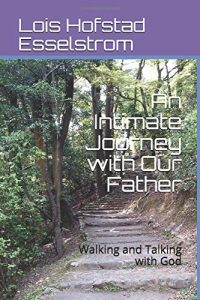
Lois Hofstad Esselstrom Ph.D. ’58 Publishes “An Intimate Journey with Our Father: Walking and Talking with God”

Book cover for An Intimate Journey with Our FatherAlumna Lois Hofstad Esselstrom, Ph.D., has recently published “,” available on Amazon for purchase. Before earning her bachelor of arts from Augsburg in 1958, Lois grew up in the home of a pastor and educator and says her family walked and talked with God through Bible reading and prayer. She went on to earn both an M.A. and Ph.D. from Western Reserve University. She has been a church parish worker, a publish school teacher and聽a professor of English at Indiana University South Bend. She and her husband Michael Esselstrom have two children and are now retired in Florida.

About this Book (from the author)

To walk life’s road with the Almighty God, engaged in intimate conversation with Him? Can it be? As astonishing, indeed shocking, as this concept is, it is simple enough for a child to experience. I know because I was that child. When I was very small, Mother found me on a chair talking to Someone she could not see. “Who are you talking to?” she asked. “I’m talking to Jesus. You said He was here.” Ever since that day decades ago I have known that I may talk to Jesus, or more precisely, with Jesus, with God. God chooses to engage with children, men, and women in intimate dialogue. Sometimes He initiates the conversation through words of the Bible as we read or remember them. Sometimes words from morning devotional reading steady me all through the day. Our answer is amazement and gratitude. Or we speak to Him first, through conscious prayer or through longings which He hears in our hearts. He answers according to what is best for His child. Jesus was very specific about God’s intentions. He said that He and His Father would “come and make our home” with those who love Him. It occurred to me that God, Who is Love, may enjoy being welcomed to be at home in our personal lives even more than we limited mortals can rise to being glad He has come. Thus, as the almighty God lives in our lives, we, together with believers of all ages, bear witness to the reality of An Intimate Journey with Our Father: Walking and Talking with God.

Meet Distinguished Alumni Award Winner David J. Melby 鈥68

David J. Melby 鈥68, Ph.D., is a psychologist, executive leader, professional volunteer, and advocate who embodies faithful service in true 绿茶直播 form. 聽Melby attended Augsburg, graduating in 1968 with a Bachelor of Arts in psychology and philosophy. Following his graduation, Melby attended graduate school in counseling psychology at Southern Illinois University-Carbondale, receiving both MA and Ph.D. degrees.

Melby鈥檚 career centered around providing and promoting the development of outpatient community mental health, substance abuse, and developmental disabilities services for people of all ages, as well as adult residential services. In 1974, he joined Mental Health Services of Franklin and Williamson Counties, Inc. (now known as Centerstone of Illinois) as a clinical psychologist. His role expanded the following year to include that of division director of mental health services; he served as CEO of that agency from 1996 until his retirement in 2006. Prior to his retirement, Melby served six years on the board and one year as president of the Illinois Association of Community Mental Health Agencies.

One of Melby鈥檚 nominators says, 鈥淗is professional leadership in community mental health has made the lives of many who struggle with these issues brighter and more hopeful because of his nearly 50 years of service. David brings a selfless approach to volunteerism that inspires and supports those in our community鈥檚 efforts to improve the quality of life in the communities we serve.鈥

For almost two decades, David has served as a volunteer for the American Heart Association (AHA). 聽He twice served as chairperson of the Southern Illinois Heart Walk and once of a Southern Illinois Heart Gala, raising awareness regarding heart-healthy lifestyles and fundraising for heart research, education and life-saving equipment, such as Automated External Defibrillators in public places. He currently serves as a member of the Illinois Advocacy Committee of the AHA, advocating for a heart-healthy state and federal legislation.

Throughout his career, Melby has been influenced by his father鈥檚 ministry and involvement in clinical pastoral counseling and the death of his infant brother, who was born with a heart defect and Down Syndrome. He was also motivated by the growing needs of his parents in their last years. He has consistently demonstrated his concern for people marginalized in society, often the poorest, sickest, and most stigmatized among us.

In retirement, David has become more involved in the work of not-for-profit and governmental agencies whose missions he supports. They include multiple terms on the Williamson County Housing Authority Board of Commissioners, including as chairperson, and on the River to River Residential Communities Board, providing independent living, assisted living, supported living, and memory care services for seniors in multiple communities across southern Illinois. He has served since 2012 on the Board of Directors of Centerstone of Illinois, one of five Centerstone state service entities that, collectively, comprise one of the largest and most influential not-for-profit behavioral healthcare enterprises in the nation. Since 2014, David has also served as a board member and, now, current board chair of the Centerstone Research Institute (CRI), based in Nashville. CRI is currently developing evidence-based best practices for addressing the national opioid crisis, developing its first Center of Excellence for the treatment of depression, and reducing the 鈥渟cience-to-service cycle鈥 in the treatment of behavioral health disorders.

Melby exemplifies servant leadership and the Augsburg value of being educated to serve. 聽For decades, he has served his church community in many capacities, including as president of the church council for over 10 years, co-chair of the building committee during construction of a new sanctuary, and delegate to the 2013 ELCA churchwide assembly. Whether through his contributions to the field of behavioral health care or his volunteerism, David has worked tirelessly to serve his community and embodies the values we work to instill in Auggies. In his life as a thoughtful steward and responsible leader, he has used his skills and gifts to impact communities and create healthier, more fulfilling lives for all.

Meet Distinguished Alumni Award Winner Brynn A. Watson 鈥89

Brynn A. Watson 鈥89 is an award-winning leader in the aerospace industry, nationally recognized for her technical expertise, executive leadership, and advocacy for STEM education. She currently serves as Lockheed Martin鈥檚 vice president for the Future Enterprise Program overseeing the corporation鈥檚 transformational digital technology operations.

In her nomination letter, the Augsburg Women Engaged (AWE) Council said, 鈥淏rynn’s accomplishments during her career at Lockheed Martin stand for themselves. We are so proud to see an Auggie woman pioneering for other women in STEM.鈥

Watson earned a Bachelor of Arts degree,聽summa cum laude, in mathematics from 绿茶直播 and a Master of Science in applied mathematics from the University of California at Riverside.

In prior leadership roles at Lockheed Martin, Watson was vice president of Navigation Systems Operations and deputy for the Global Positioning System (GPS) III program for Lockheed Martin Space. GPS III is the U.S. Air Force鈥檚 next-generation program improving position, navigation, and timing services to all users. 聽Before that, she was vice president of an engineering organization in the Space line of business leading more than 5,300 engineers, responsible for personnel management and development, engineering and technology strategy, engineering processes, tools and training, and product technical validation. Prior to that assignment, she served as director of software engineering, responsible for the execution and strategic direction over 1,200 software engineers; leading a strategic initiative focused on maximizing digital integration and end-to-end system modeling.聽Additionally, she served as director of engineering, collaboration, and operations for Corporate Engineering and Technology, and deputy to the vice president of Engineering.

Watson began her aerospace career as an engineer at Aerojet Electronic Systems in Azusa, Calif., where she held positions in a variety of systems and software engineering areas.

Watson is a member of Women in Aerospace, the American Institute of Aeronautics and Astronautics, and the Lockheed Martin Women鈥檚 Impact Network.

She has been recognized for her leadership, receiving the 2013 Lockheed Martin Space NOVA Full Spectrum Leadership Award; the 2012 Tribute to Women Honor by the YWCA of Silicon Valley; and the 2008 Lockheed Martin Space Ed Taft Diversity Leadership Award. In 2015, Watson鈥檚 essay, 鈥淎 Look Inside Lockheed Martin鈥檚 Space-Age Operations,鈥 was published by the Harvard Business Review.

Watson鈥檚 enterprising spirit and accomplishments mirror the tenacity of Auggies around the world, who, through study, experience, and hard work, ascend to prestigious positions among today鈥檚 leading companies.

Watson credits her time at Augsburg as helping her to think big and believe that she can accomplish anything with hard work and perseverance. She also feels that her strong advocacy for women was built by the dedicated women she interacted with during her time at the university.

Homecoming Auggie Talk: The Study Abroad Experience, Yesterday, Today & Tomorrow 鈥 Hosted by the Class of 1978

for Homecoming!


Saturday, Oct. 13 from 1 鈥 1:45 p.m.

Auggies from the class of 1978 have traveled the globe studying in places like Norway, Central America, and London. The opportunities to study abroad while at Augsburg have shaped their lives and the lives of many of its graduates. Join the class of 1978 as they reflect on their own study abroad experiences and examine Auggie global education of yesterday, today and tomorrow.

About Auggie Talks:

They鈥檙e back by popular demand! Join us for 30-minute, insightful sessions presented by professors and fellow alumni on topics spearheaded by your class reunion groups. Talks will be published as they become available on social media and in upcoming communications.

Space is limited. Please today for Auggie Talks.